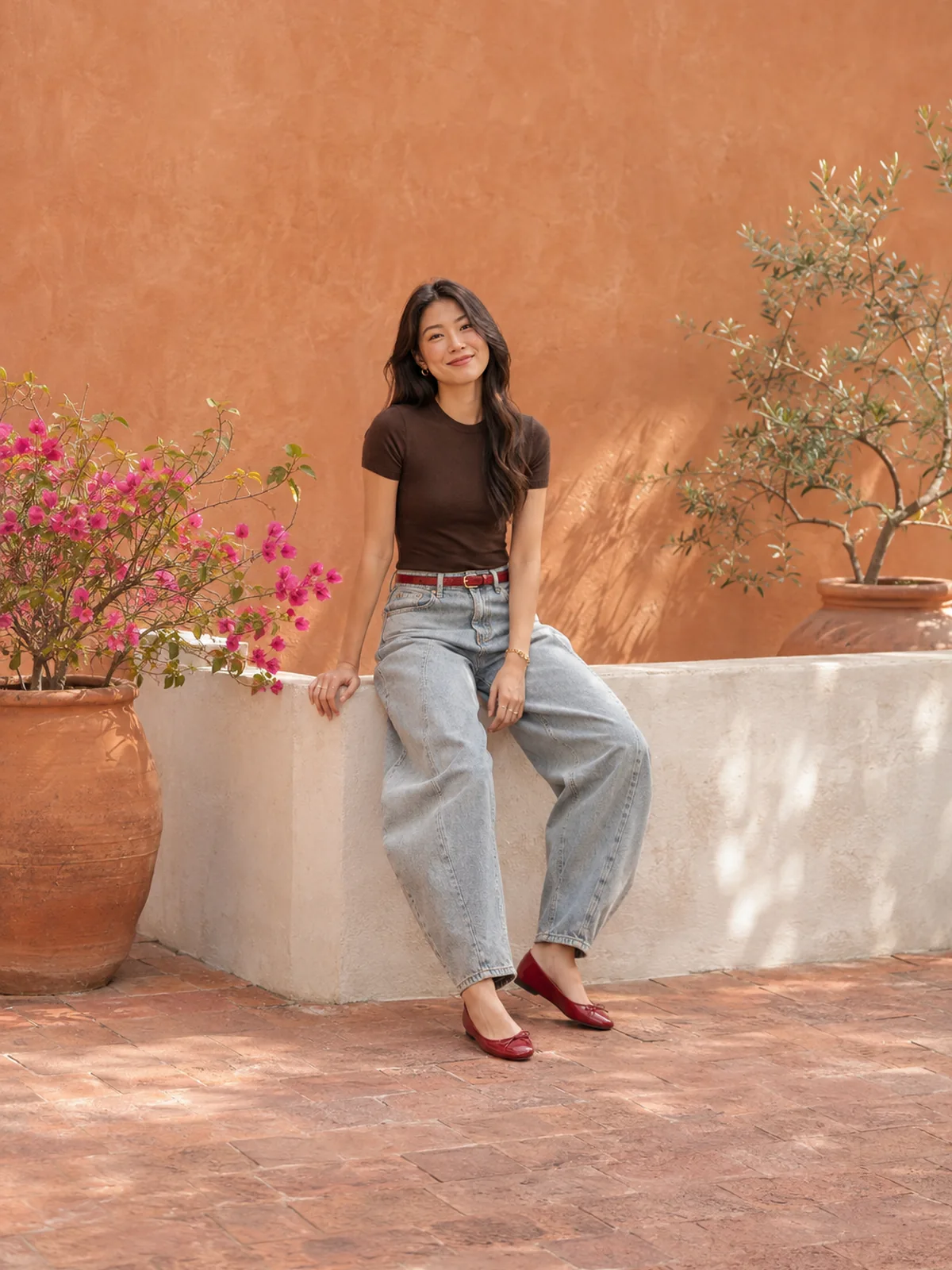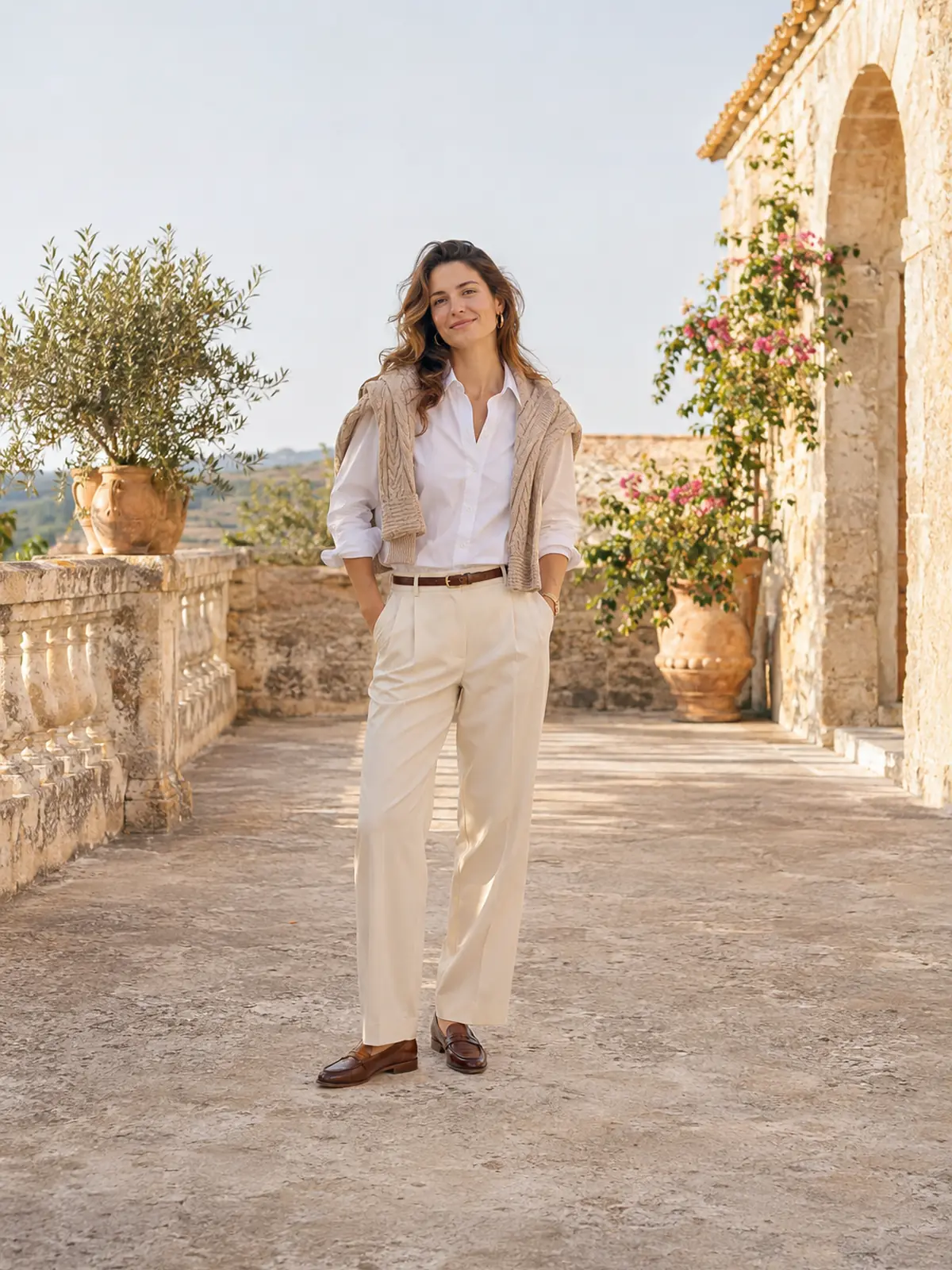
The old money aesthetic is a styling label for understated tailoring, knitwear, classic outerwear, and restrained accessories. You can explore it with clothes you already own: straight trousers, a simple shirt, a cardigan, and neat shoes. Treat the name as optional visual vocabulary, not a claim about wealth, character, or belonging.
This guide may contain affiliate links. As an Amazon Associate we earn from qualifying purchases. How our links work.
Define the look without adopting its social baggage
In style discussions, this aesthetic often points to quiet colors, familiar shapes, and clothes that look considered rather than heavily branded. Interpretations vary, so there is no official uniform or list of approved purchases. A navy sweater and cream trousers might suggest it; neither item says anything reliable about the wearer's finances or background.
Keep the parts that serve you and discard the class associations. Good taste does not belong to an income bracket, a family history, a body type, or a particular culture. The goal here is a usable way to combine clothes, not passing as someone else. Our vibes guides approach aesthetics as ideas you can borrow and change.
It also helps to separate quiet styling from high spending. A garment can be expensive and badly suited to your routine; an inexpensive or secondhand piece can fit beautifully. The useful question is whether the fabric, cut, condition, and care requirements make sense for you.
Build around three proportions
Start with a trouser that falls cleanly from the hip, a top that sits comfortably around the shoulders, and an outer layer that leaves room to move. These simple relationships make outfits feel intentional. You do not need every item to be fitted; a relaxed shirt can work with a straighter trouser, or a close cardigan with wider legs.
Check the hem while wearing the actual shoes. A long trouser pooling over a slim loafer creates a different effect from a cropped hem and visible sock. Neither is wrong, but accidental dragging can interrupt the tidy outline you may be aiming for.
Try sitting, reaching forward, and fastening a bag strap before deciding a piece fits. Pulling buttons, restricted upper arms, or a waistband that digs in will not become elegant through willpower. A little ease often looks more natural than tailoring that behaves like a costume.
Choose a small palette you genuinely enjoy
Navy, cream, brown, charcoal, pale blue, and olive are easy starting points because they combine in many ways. Choose two darker colors and one lighter color already present in your wardrobe. This gives you a compact working palette without requiring beige from head to toe.
For example, navy trousers, a white shirt, and a brown belt create clear, repeatable relationships. Swap the shirt for a pale blue knit and the outfit still belongs to the same wardrobe. Color repetition provides continuity; exact matching across leather accessories is not compulsory.
If you prefer saturated color, keep it. A burgundy sweater under a dark coat or a green cardigan with gray trousers can use the same restrained structure. The aesthetic becomes easier to wear when it includes something you actually like, rather than a list of colors selected by an algorithm. For a richer winter version of the palette, chocolate or wine velvet outfits pair well with gray, cream and navy.
Read fabric and construction before the label
Look at the garment in normal daylight. Does the fabric become unexpectedly transparent? Does the knit recover after being gently stretched? Are the seams comfortable against your skin? Fiber names alone cannot answer those questions. Cotton, wool, linen, and blends vary substantially in weight, finish, and construction.
Blends are not automatically a compromise, and natural fibers are not automatically luxurious or easy to care for. A washable blend may make more sense for your commute than delicate tailoring. Check the care instructions before buying and decide whether you will realistically follow them.
For applicable clothing sold in the United States, the FTC's Care Labeling Rule requires manufacturers and importers to provide care information. Use that label as a practical decision tool. Do not assume a wool knit can be machine-washed or that every linen item tolerates the same heat simply because another garment did.
Try an everyday outfit before a dressy one
Combine straight dark trousers, a plain T-shirt, an open cardigan, and clean low-profile shoes. Keep the T-shirt neckline visible and let the cardigan provide the soft structure. This gives you a starting outfit for errands, a casual lunch, or a relaxed workday where the dress code permits it.
A second version uses dark straight jeans, a striped shirt, and a simple jacket. If a full tuck feels bulky, try a thinner shirt or leave it untucked when the length works. For more denim options, styling wide-leg jeans offers ways to balance volume without making the outfit formal.
For warmer weather, pair tailored shorts or lightweight trousers with a plain shirt and simple sandals. Keep the outfit appropriate for the actual location and dress code. A style label does not turn open shoes into officewear where an employer requires closed footwear.
Adapt the tailoring formula for work
Start with one structured piece, such as a blazer, and keep the rest straightforward. A soft knit under a blazer and comfortable trousers can feel less rigid than a matching formal set. If the jacket bunches when you sit, try a lighter layer underneath or a different cut.
Our guide to business casual outfits for men explores related combinations, but the underlying proportion ideas are not restricted by gender. A shirt, trouser, knit, and jacket can be adjusted around your preferences rather than a prescribed identity.
If your workplace is casual, a blazer may be unnecessary. A tidy overshirt or cardigan can provide enough structure. Conversely, if the setting is formal, check its expectations first instead of assuming a social-media version of relaxed tailoring is sufficiently dressed up.
Keep accessories useful and deliberate
A belt should fit the trouser loops and feel comfortable when seated. A bag should hold what you carry without distorting the way it hangs. Shoes should work for the walking your day requires. Those functions matter more than whether an item resembles a recognizable luxury design.
Choose one or two visible accents rather than adding every familiar symbol at once. A watch and small earrings, or a scarf and simple bag, can be enough. You do not need imitation crests, conspicuous logos, or jewelry selected to imply an inheritance.
Sunglasses are a good example of separating appearance from performance. A restrained frame may suit the outfit, but UV protection and fit still come first. Do not let an aesthetic description stand in for the actual product information.
Troubleshoot an outfit that feels stiff or costume-like
If the look feels too formal, remove one structured element: exchange the blazer for a cardigan, the pressed shirt for a T-shirt, or the dress shoe for a clean sneaker. Change one variable at a time so you can see what improves the balance.
If it feels bland, add texture before buying more accessories. A ribbed knit, a matte woven bag, or a subtly striped shirt introduces variation without requiring a louder palette. If everything looks oversized, define one point such as a trouser waist, cuff, or shorter outer layer rather than tightening the entire outfit.
If the outfit only looks right while standing still, revisit fit. Styling should survive a chair, a commute, and carrying your belongings. That test is more useful than reproducing a posed photograph exactly.
Make care and repetition part of the look
Air garments when appropriate, follow their labels, and attend to loose buttons or hems before the damage grows. Use suitable storage rather than hanging a heavy knit in a way that stretches it. Avoid aggressive de-pilling or ironing until you know what the fabric permits.
The simplest way to build continuity is to repeat successful combinations. Our minimalist capsule wardrobe guide can help you identify those combinations before adding anything new. A small wardrobe is not mandatory; knowing how your pieces work together is the useful part.
Your questions, answered
Do I need designer clothes for this aesthetic?
No. Focus on fit, condition, compatible colors, and outfits that work in your life. A visible label does not make a garment more suitable or a person more stylish.
Can I wear jeans?
Yes. Straight, wide-leg, or gently tapered jeans can work with knitwear and a simple shirt. Choose the wash and shape you like rather than treating tailoring as the only option.
Is the old money aesthetic a dress code?
No. It is an informal styling label with varying interpretations. Real workplace, event, cultural, and personal requirements take priority over an internet aesthetic.
Sources & further reading
Sources support the factual guidance they address; aesthetic suggestions are editorial judgment, not claims of product testing.