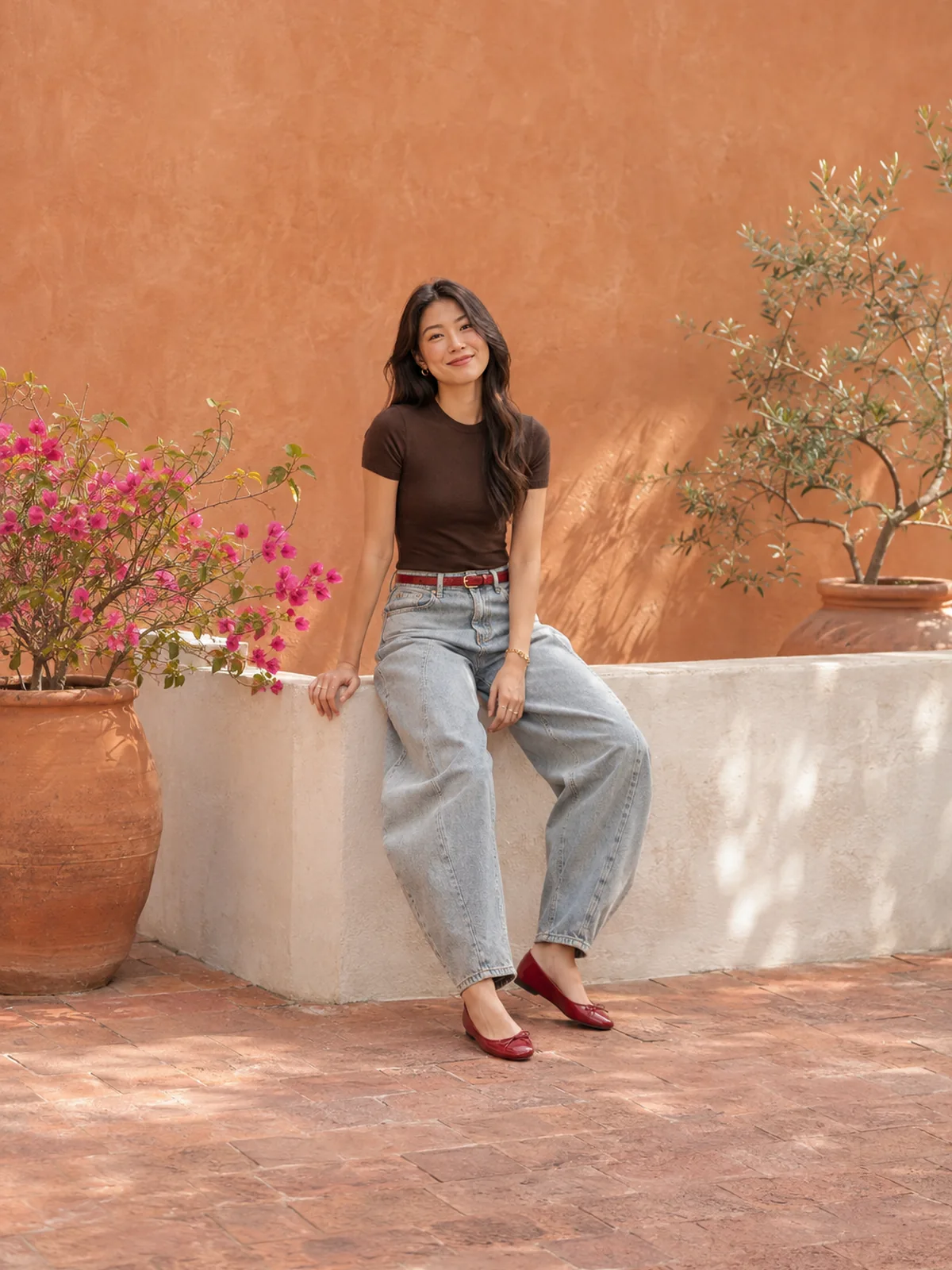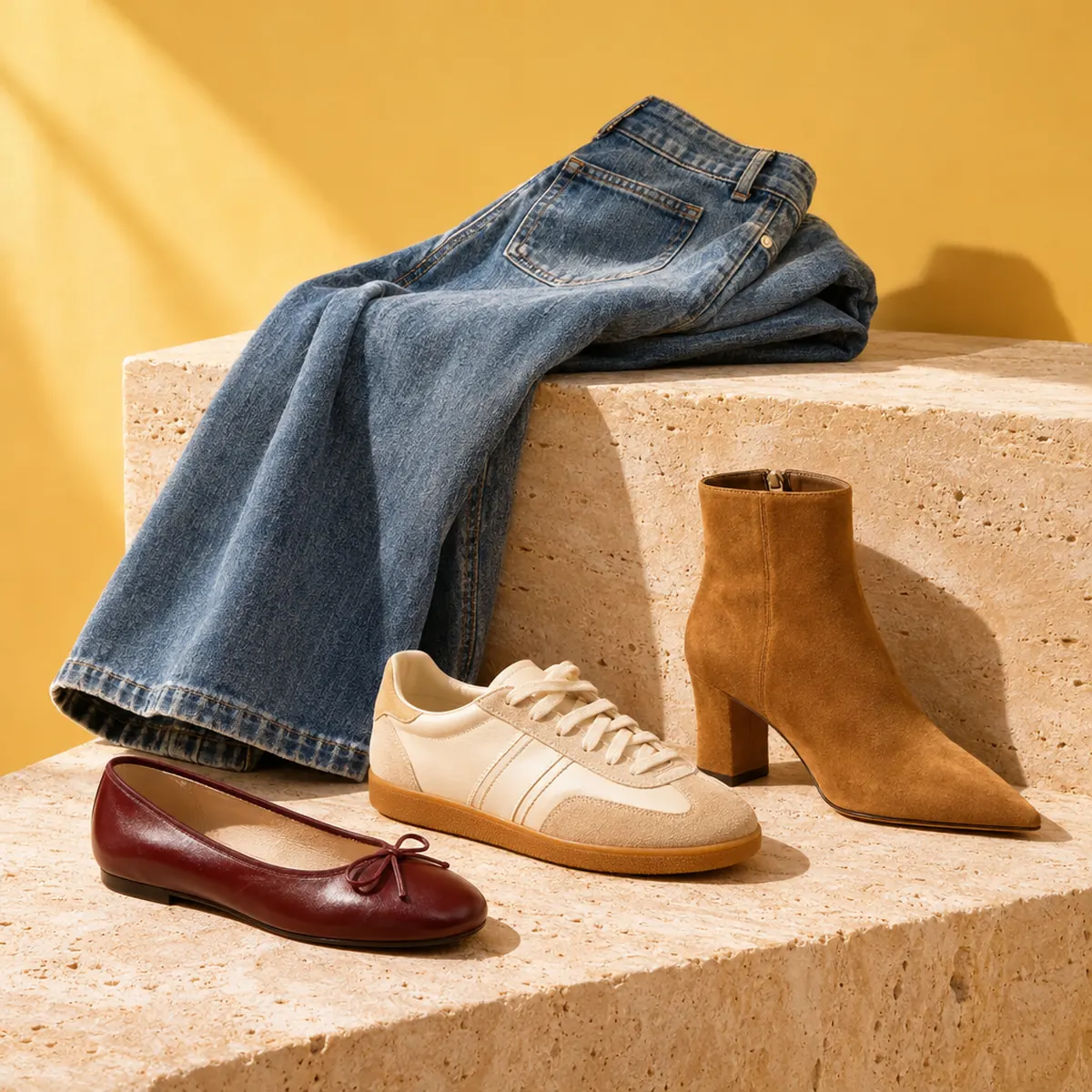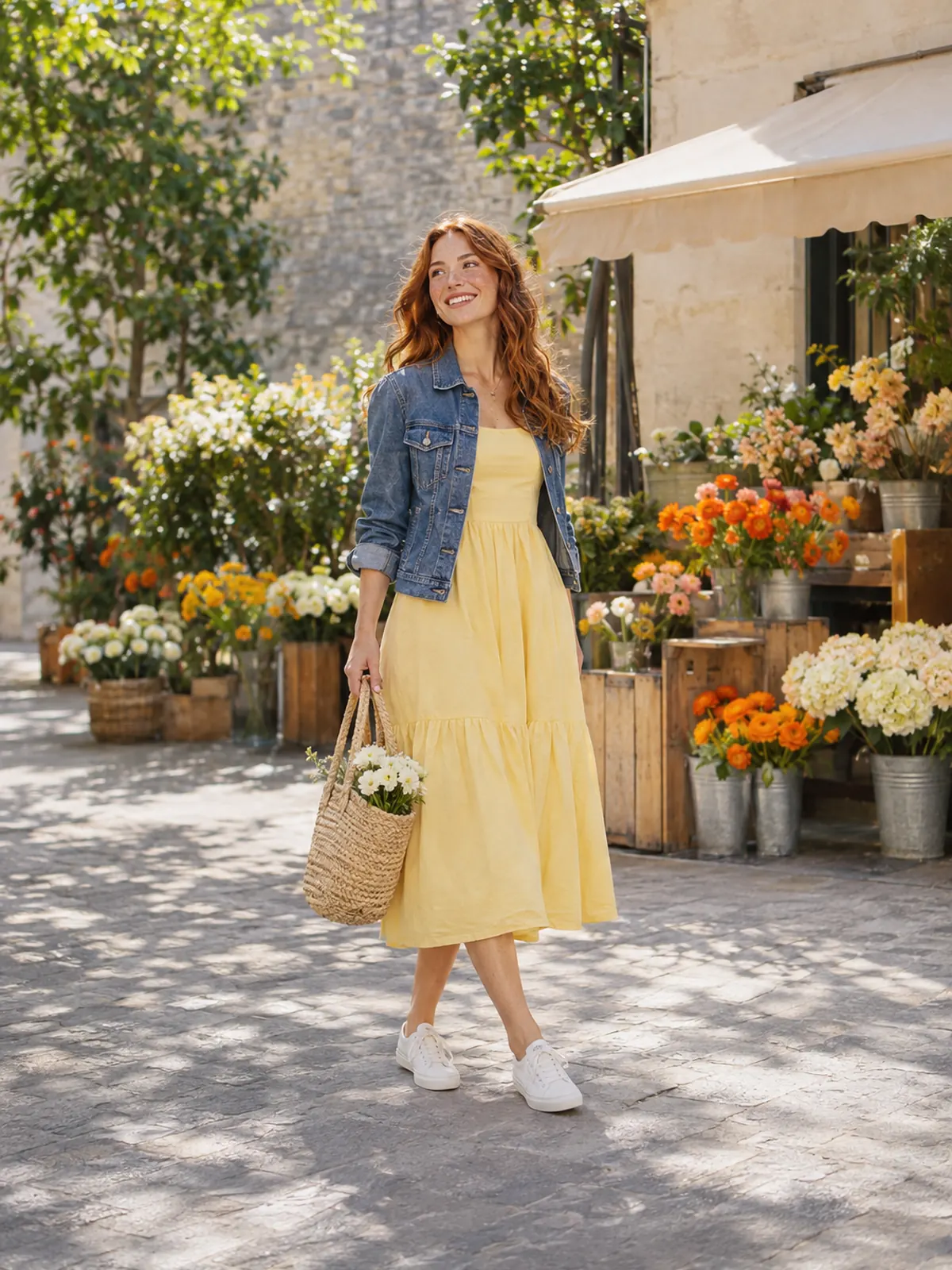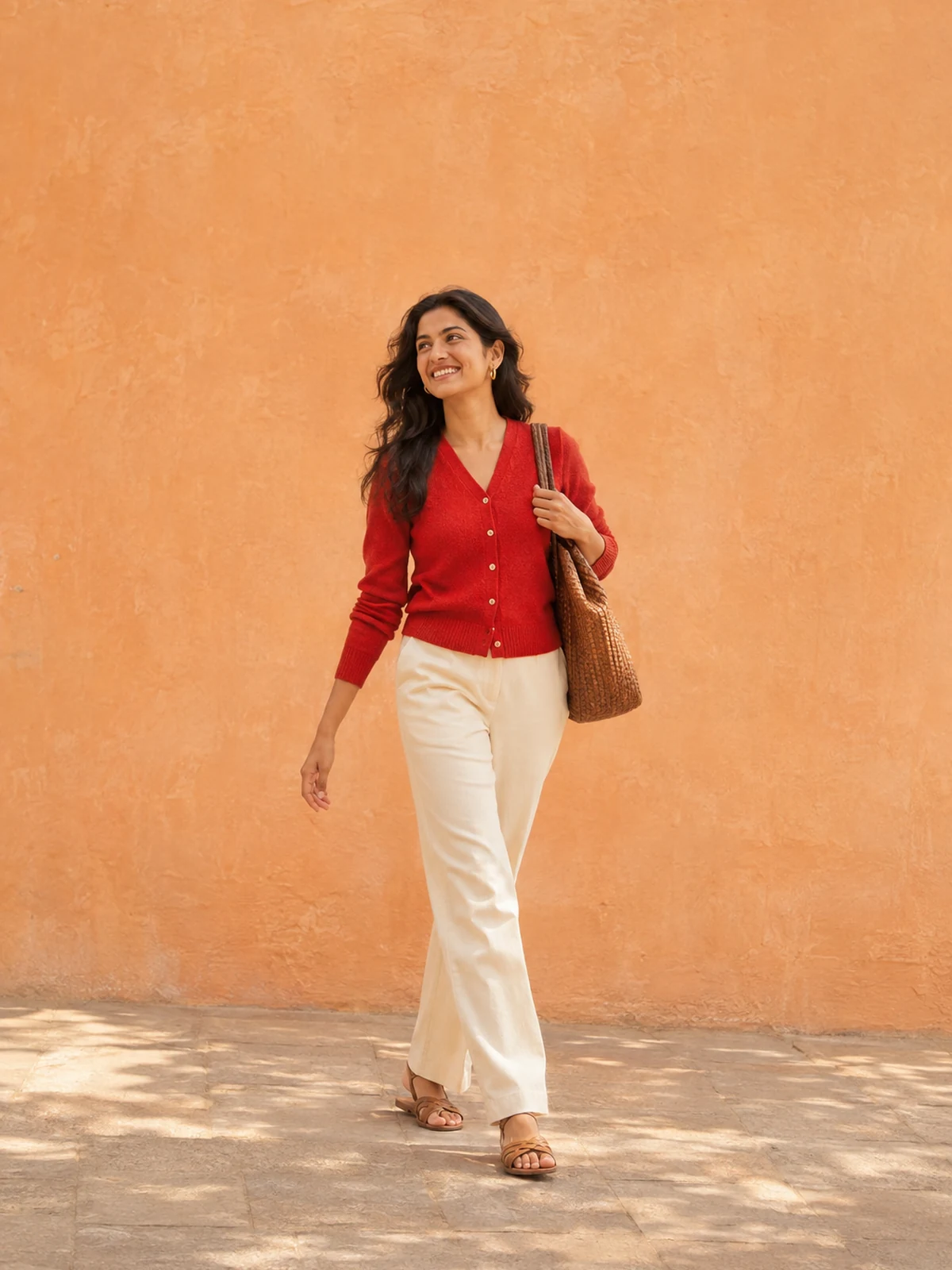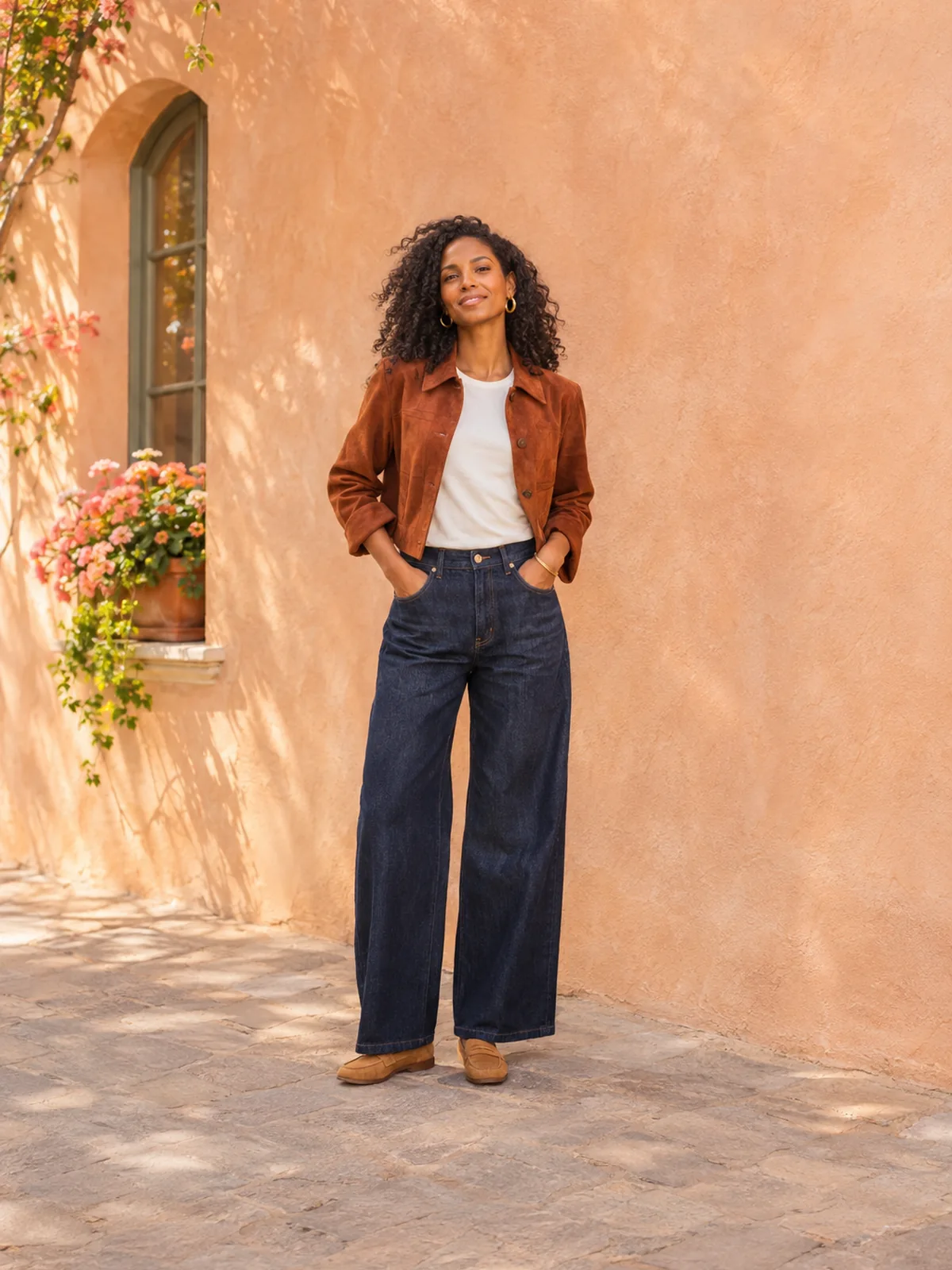
To style wide leg jeans, start with a comfortable waist, a hem that clears the ground, and a top whose length looks deliberate beside the wider leg. A tucked T-shirt, short cardigan, or relaxed shirt can all work; the difference is where each ends. Build your first outfit around shoes you already enjoy wearing, then adjust the top and outer layer rather than assuming you need heels or a whole new wardrobe.
This guide may contain affiliate links. As an Amazon Associate we earn from qualifying purchases. How our links work.
Start with the jeans, not a body-type rule
Wide leg describes the silhouette, not a single fit. Some pairs fall almost straight from the hip; others widen dramatically below a fitted thigh. Try yours on with a plain top and check the waistband while sitting, bending, and walking. If the pockets pull open or the zipper area strains, styling tricks will not replace a better fit. A waistband that gaps while the hips fit may be worth having altered.
Choose the shape you like seeing rather than trying to make your body imitate a reference photo. A high rise can create a short-top-and-long-leg effect, while a mid rise leaves more room for a relaxed torso line. Neither is required. Our fashion hub collects more approaches if you want to compare silhouettes before committing to one.
Set the hem with your everyday shoes
Put on the shoes you expect to wear most, then look at the jeans from the front, side, and back. A full-length pair can skim the shoe without folding underneath your heel. An ankle-length pair should look intentionally shorter rather than like a full-length hem caught on your shoe. There is no universal inseam because rise, leg shape, shoe height, and your preferred break all change the result.
Walk across a clean floor and climb a step. If you tread on the back, arrange an alteration or try a temporary inward fold to preview a shorter length. Do not rely on walking carefully to protect a dragging hem. For specific combinations, use our guide to what shoes to wear with wide leg jeans before deciding how much fabric to remove.
Use one of three easy top lengths
A top ending near the waistband makes a clear division between upper and lower halves. Try a short knit with high-rise denim, keeping enough overlap for comfortable movement if you prefer coverage. A tucked top creates a similar boundary without needing a cropped garment. Start with a thin cotton tee rather than forcing a bulky sweater into the waistband.
A longer top can work too. Leave a fluid button-up untucked over the jeans, roll the sleeves if comfortable, and keep the shoe simple. If the outfit feels shapeless to you, open the shirt over a tank or tuck just the front. You do not have to define your waist; these are different ways to arrange fabric, not rules about what bodies should wear.
Make a simple T-shirt outfit feel finished
For an everyday starting point, combine medium-blue jeans, an off-white crewneck tee, and low-profile sneakers. Tuck the tee fully if it is thin, or make a shallow front tuck if it is longer. Add a belt only if it improves the fit or supplies a detail you want. A brown crossbody bag introduces another texture without requiring a perfectly matched belt and shoe set.
On a cooler day, add an open overshirt that ends around the upper hip. If you prefer a longer layer, choose one with enough room to hang freely instead of catching across the seat. Repeat a color once, perhaps a navy stripe in the tee and a navy cap, to connect the pieces without making every accessory identical.
Build a polished outfit without stiff tailoring
Dark, unembellished denim with a fine-gauge knit and loafers is a useful starting point for a smart casual setting. Add a blazer whose shoulder and sleeve fit let you move easily. A shorter blazer reveals more of the jeans; a longer one creates a deliberately relaxed column. Check the full outfit seated as well as standing, especially if the waistband is rigid.
Whether jeans belong at work depends on the workplace, not the wash alone. Confirm the dress code before using this formula for a meeting. If denim is welcome, a clean hem and shoes in good condition help the combination read as considered. Keep a separate trouser option for events where the invitation rules out jeans. For a dressier winter take, a velvet blazer over wide denim keeps the jeans but changes the mood; our velvet outfits guide has more combinations.
Balance outerwear by checking the side view
A waist-length jacket keeps the silhouette compact on top, which makes it an easy partner for a very wide leg. A long coat offers another coherent option: let it fall past the hips and leave it open when the weather permits. The awkward point is not a forbidden jacket length; it is usually several stiff layers competing at the same place.
If the back of a jacket catches on a thick waistband or belt, try a thinner belt, a smoother base layer, or a jacket with more room. For double denim, start with contrasting washes so the pieces feel intentionally separate. Our guide to how to style a denim jacket explores additional layering combinations.
Adapt the formula for warm and cold weather
In warmer conditions, try a sleeveless cotton top, loose denim, and secure flat sandals. Pay attention to the actual fabric: a thick, rigid pair may feel very different from a lighter woven denim even when both have wide legs. A lighter color does not automatically mean lighter fabric. Choose enough freedom of movement to sit comfortably outdoors.
For cold days, start with boots and test whether the hem falls over the shaft without catching. Add a fitted or relaxed thermal layer according to your preference, then a sweater that leaves room for it. If snow or heavy rain is expected, a shorter hem is more practical than a floor-skimming one. Change the outfit for the conditions rather than sacrificing traction to preserve a photo.
Troubleshoot the details that look accidental
If fabric bunches heavily over the shoe, compare a shorter hem with a different shoe profile before changing everything else. If the front tuck creates a lump, untuck and fold the tee under itself first, or use a thinner top. If the legs look uneven, check whether the waistband is sitting level and whether one hem has caught on a shoe.
If the outfit feels too busy, remove one competing element: a large buckle, a patterned top, or a bulky shoe. If it feels too plain, add one specific contrast instead, such as a ribbed tank under a smooth shirt or a structured bag beside soft denim. Take a quick mirror photo to compare changes, but prioritize movement and comfort over a frozen pose.
Keep denim care separate from styling advice
Read the garment's own care label before washing, drying, steaming, or ironing. The FTC's care-label guidance explains why instructions and warnings matter; a generic denim rule cannot account for every dye, trim, or stretch blend. Do not deliberately hot-wash jeans to fix a poor fit unless you are willing to accept unpredictable changes. Alterations offer a more targeted route to changing length.
If a spill happens, check the care instructions and treat the affected area with a suitable method rather than rubbing aggressively at the dye. Avoid making several changes at once. Preserving a pair you already like also makes outfit planning easier: our minimalist capsule wardrobe guide shows how one dependable jean shape can anchor repeatable combinations.
Your questions, answered
Do wide leg jeans always need a fitted top?
No. A roomy shirt or sweater can look intentional with wide denim. Try adjusting its length, opening a shirt over a tank, or choosing softer fabric if several bulky layers feel cumbersome.
Can you wear wide leg jeans if you are short?
Yes. Choose a rise you find comfortable and assess the inseam in your actual shoes. Shortening an overly long hem usually helps more than following a rule that shorter people must wear heels.
Should wide leg jeans touch the ground?
They do not need to. A hem that clears the ground is easier to walk in and avoids being stepped on. Check the back hem in motion, not just the front in a mirror.
Sources & further reading
Sources support the factual guidance they address; aesthetic suggestions are editorial judgment, not claims of product testing.