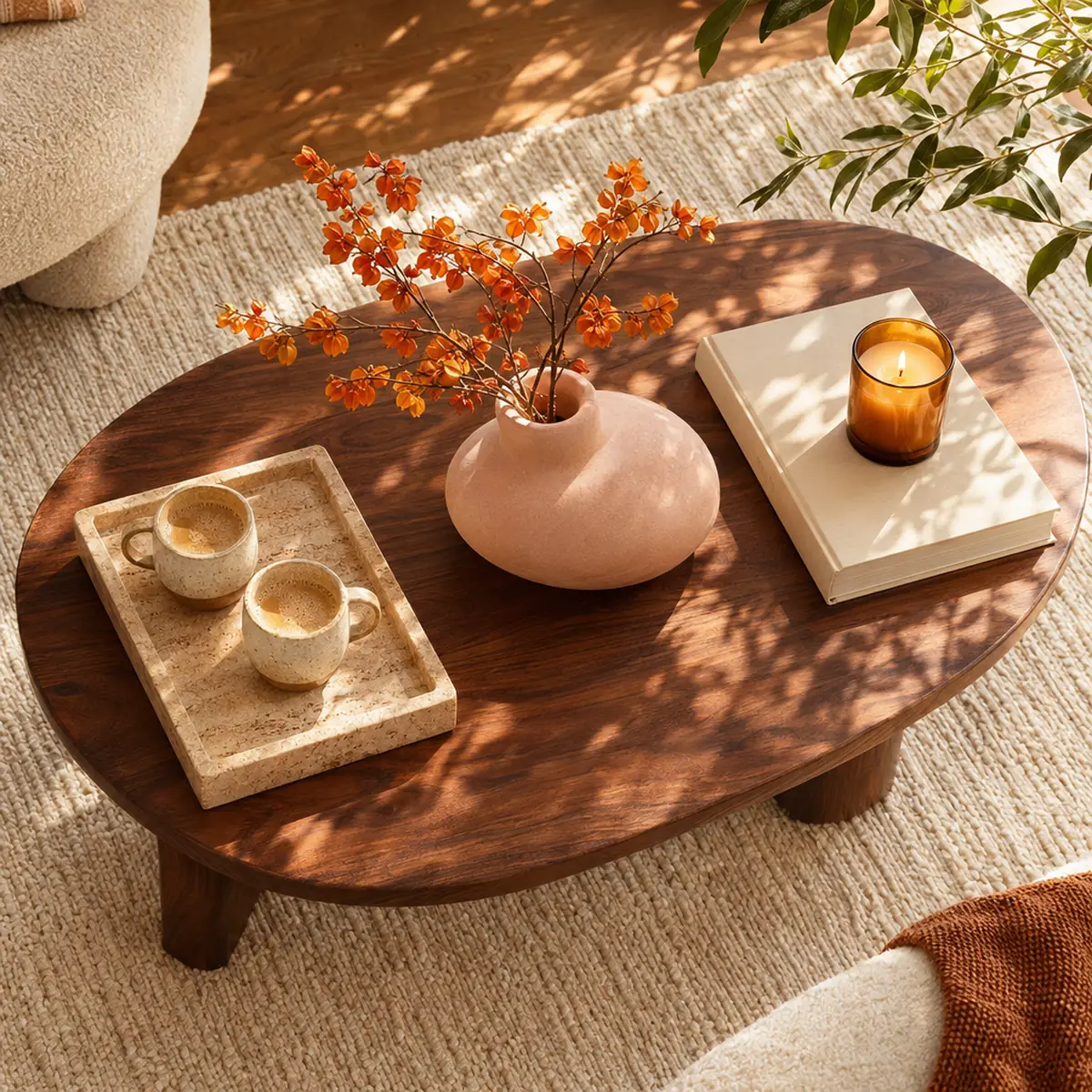
To style a coffee table, reserve space for the way you use it, then add a small grouping of objects with different shapes or heights. A tray, a book you actually open, and one low decorative piece can be enough; you should not need to clear a display every time you sit down.
This guide may contain affiliate links. As an Amazon Associate we earn from qualifying purchases. How our links work.
What belongs on your coffee table in the first place?
Start with an ordinary evening rather than an inspiration photo. Do you set down two mugs, eat a snack, use a laptop, or play cards? Do children build on the tabletop? List those activities before deciding how much display space is available. A coffee table that doubles as a family work surface needs a different arrangement from one in a rarely used sitting room.
Remove everything and return only the items that support those activities. Give remotes, coasters, and reading glasses a defined place. A small open container may work better than a lidded box if everyone leaves the lid off anyway. Our home styling guides treat storage habits as part of decoration, not as a problem to hide after the room is finished.
Notice the route around the table, too. A large tray that overhangs a narrow top can catch clothing, and a floor basket beside the table may interrupt the path to the sofa. Styling cannot fix furniture that is awkwardly positioned. Test the table's location with everyone seated and someone walking through before adjusting the objects on top.
How many objects do you need?
Begin with one practical group and one decorative element. For example, corral remotes and coasters in a shallow tray, then add a low bowl nearby. Alternatively, place one attractive book beside a single sculptural object. Odd-number groupings are a possible visual tool, not a rule that requires you to buy a third object.
Think in groups rather than individual pieces. A tray containing coasters and a remote can read as one zone, while a short stack of books reads as another. Two clear zones may feel calmer than five unrelated items dotted across the surface. Leave an obvious landing place for a drink rather than distributing the gaps into spaces too small to use.
If you enjoy a fuller look, add one item at a time and sit down between changes. Check whether you can still reach the useful objects without knocking something over. You can stop before the arrangement resembles a magazine photograph. The right amount is the amount your household will maintain without repeatedly pushing everything to one side.
How should you style different table shapes?
For a round table, start with a loose off-center grouping that leaves a generous arc of usable surface. A small rectangular stack of books can create useful contrast with the circle; a round tray is optional. Avoid filling the entire circumference with evenly spaced objects, which leaves no clear place to set anything down.
On a rectangular table, try a tray near one end and a low book stack toward the other, keeping the middle or sofa-facing edge open. A long narrow table usually benefits from a narrower arrangement rather than a large central bowl. Consider where people actually sit: the open area should be reachable from the seats, not stranded on the far edge.
For a square table, one compact grouping offset from the center can work better than decorating all four quarters. For nesting tables, let one carry the display while the other remains available to pull out. Check that any arrangement remains stable when the tables move. Do not stack heavy decorative pieces on a lightweight movable top without checking its load limit.
How do height, color, and texture work together?
Vary the outline just enough to make the grouping legible. A flat book, a rounded bowl, and a small upright vase offer three different shapes. The vase does not need to be tall. Sit in every main seat and make sure the arrangement does not block conversation, the television, or the view you enjoy from the sofa.
Repeat something already present in the room. A wooden tray might echo a picture frame, while a pale ceramic bowl picks up a cushion color. You do not need a matching set of accessories. If your bookshelf is visible nearby, borrow the editing approach in how to style bookshelves so both displays have a little variety without competing for attention.
Use texture thoughtfully rather than collecting every material you like. A rough-bottomed ceramic pot can scratch a delicate finish, and an absorbent woven tray may not contain spills. Check the objects' undersides and the table manufacturer's care instructions. Protective pads can help when compatible with the finish, but some adhesives or rubber materials may mark certain surfaces.
Should you use a tray, books, flowers, or candles?
A tray is useful when it makes a whole group easy to lift for cleaning or games. Choose one that you can carry safely when loaded, with no awkward overhang. A tray is not automatically spillproof, so keep coasters where the table needs them. If the tray simply adds another edge to reach over, skip it.
Choose books you are happy to have handled. One large book may work better than a precarious tower, and a paperback you are reading can belong here too. Avoid using an important or delicate book as a coaster stand beneath a water-filled vase. The Library of Congress's book handling guidance is a useful reminder to protect books from damage rather than treating them only as props.
Flowers are optional. A low, stable vessel is generally easier to live around than a tall arrangement, but water and breakable glass still require care. In homes with pets or small children, consider whether an arrangement is suitable at all. If you add a plant, check species-specific safety with a reliable veterinary or poison-control source rather than assuming a decorative plant is harmless.
Flameless candles avoid an open flame, though small batteries must remain inaccessible to children. If you burn a candle, follow its instructions and keep it well away from anything that can burn. The National Fire Protection Association's candle guidance recommends stable holders, supervision, and separation from combustibles. A candle tucked among books and dried stems is not a sensible display.
How do you adapt the arrangement for children or pets?
Choose lightweight, unbreakable objects and avoid tiny loose pieces. Remove heavy bowls, sharp-edged ornaments, and trailing stems that invite pulling. A tray does not make its contents childproof; it may simply make the whole group easier to grab. Sometimes the best solution is to leave the table mostly clear and move decorative pieces to a safer location.
If your coffee table is an upholstered ottoman, use a stable tray only if it works securely on that surface and with the manufacturer's guidance. Do not assume a soft cushion can safely support hot drinks or a glass vase. Also consider whether users need the ottoman for feet, seating, or access; a permanent display can defeat the reason you chose it.
What fixes a coffee table that always looks untidy?
Identify the category that keeps returning. If mail accumulates, move mail sorting nearer the entry. If charging cables spread across the table, create a safer charging spot near an outlet. A larger decorative tray will not solve a storage system that asks people to walk to another room every time they put down a remote.
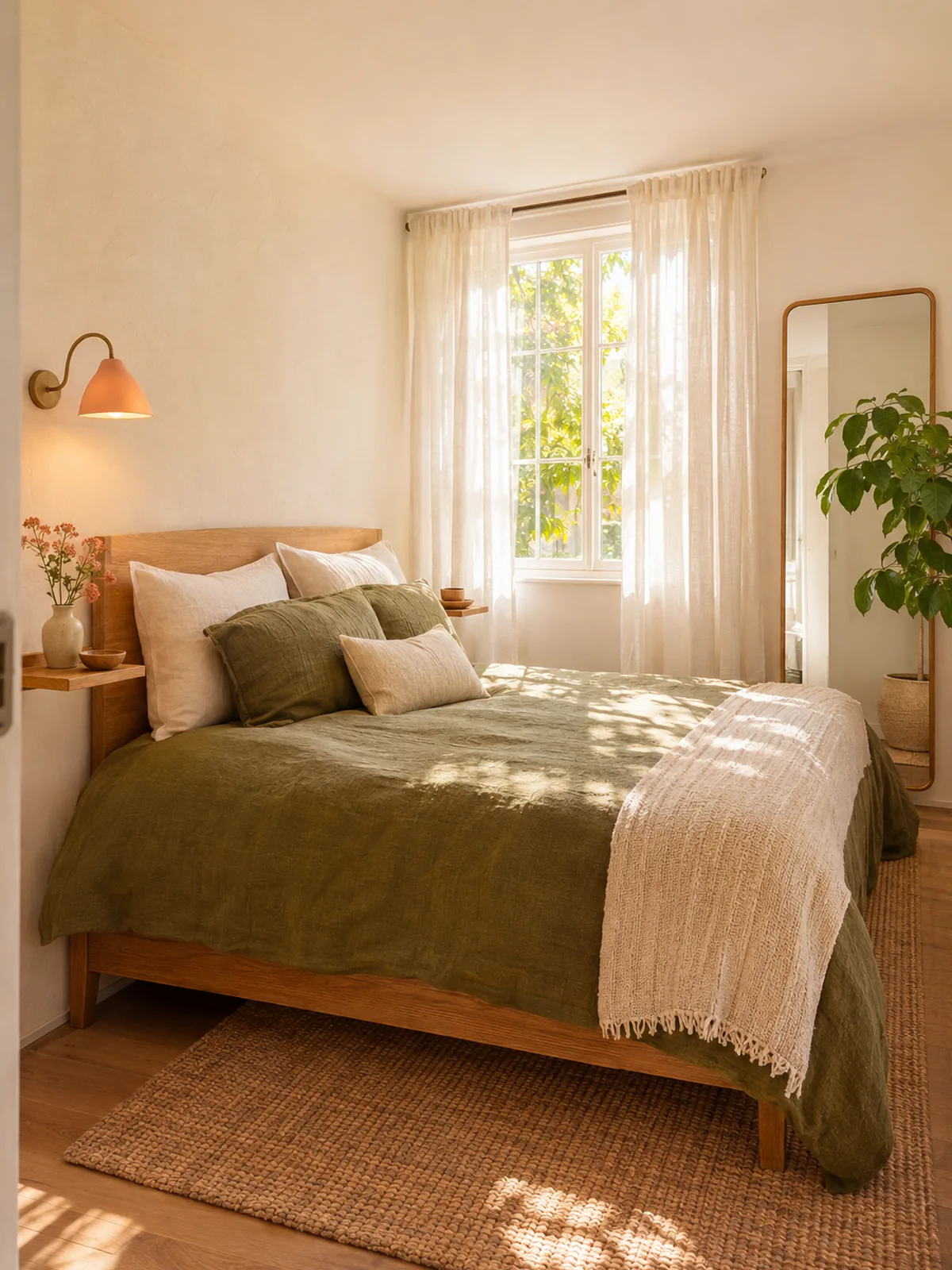
Try a reset that takes less effort than making tea: return remotes, move cups, straighten one group, and wipe the available surface according to its care instructions. If that reset requires moving a dozen ornaments, simplify. For ideas on protecting usable space in a tight room, see how to style a small bedroom; the same circulation-first logic applies here.
Live with the arrangement for several evenings before adding anything else. If your guests naturally use the free area and you can clean without dismantling a sculpture, the styling is doing its job. Change a book or a seasonal stem when you feel like it, but keep the useful layout consistent.
Your questions, answered
Does a coffee table need a centerpiece?
No. An open surface, a useful tray, or one book can be enough. Choose an arrangement that leaves reachable space for drinks and everyday activities.
How tall should coffee table decor be?
There is no universal height. Sit in your normal seats and check sightlines, reach, and stability. Keep objects low enough for the way you use the room.
How do I clean a styled coffee table?
Lift the display rather than wiping around it. Follow the table manufacturer's care instructions, dry spills promptly, and use protective items compatible with the finish.
Sources & further reading
Sources support the factual guidance they address; aesthetic suggestions are editorial judgment, not claims of product testing.