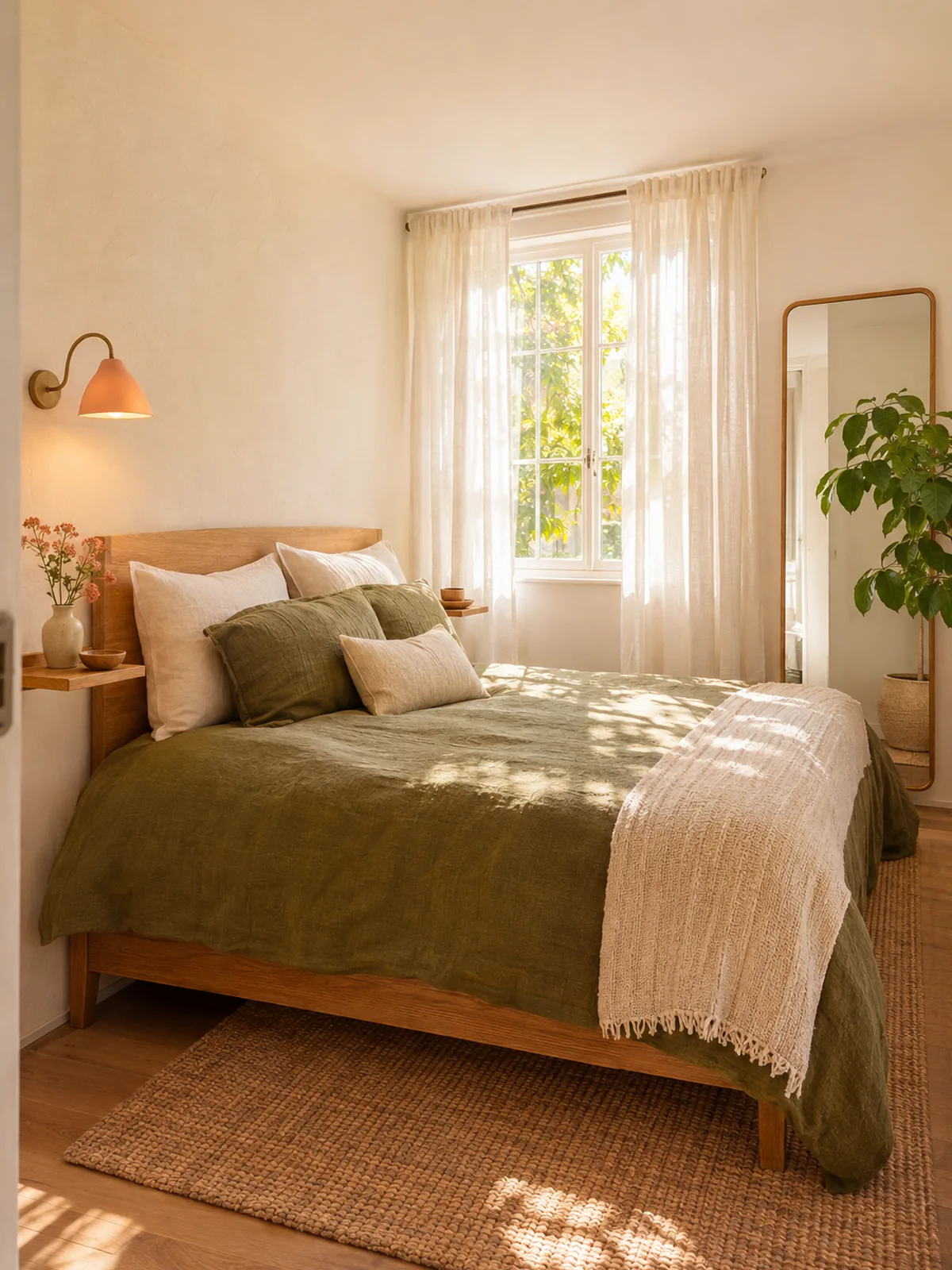
To style a small bedroom, position the bed around the room's usable walking routes, give each essential object a home, and repeat a few colors across bedding, lighting, and storage. Solve access and daily routines before buying decorative pieces; a clear route to the closet matters more than matching nightstands.
This guide may contain affiliate links. As an Amazon Associate we earn from qualifying purchases. How our links work.
What should you measure before moving furniture?
Sketch the room from above and mark doors, windows, radiators, outlets, and closet openings. Measure the bed frame rather than relying on the mattress size: a projecting footboard can take away the space you expected to walk through. Include the depth of open drawers and the arc of each door. A dresser that fits while closed may still be unusable.
Next, list what actually happens here. If you dress in another room, a small bedside drawer may be enough. If this is your only workspace, protecting a chair's pull-out area might matter more than having a second nightstand. Our home styling ideas use the same practical starting point: choose the jobs a space needs to do, then make those jobs look intentional.
Before shifting heavy furniture, mark its footprint with removable tape suited to your floor. Walk from the doorway to the bed and closet carrying a laundry basket. There is no single clearance that works for every body or mobility aid, so test your actual needs rather than treating a photograph as a floor plan.
Where should the bed go in a small bedroom?
Start with the longest uninterrupted wall, then test alternatives. A bed centered on that wall often gives two people independent access and makes the room visually balanced. A bed pushed toward one side can release useful floor area for a solo sleeper. Neither arrangement is automatically correct; the better choice preserves access to storage, windows, and the exit.
Avoid solving a tight floor plan by blocking a required escape window, covering a heater, or trapping electrical cords behind furniture. Follow the heater manufacturer's clearance instructions. If the bed must sit beneath a window, check that the headboard and window covering do not prevent the window from opening properly. Keep blind cords away from the bed, especially where children may visit.
When a large bed is nonnegotiable, shrink the supporting furniture first. A narrow bedside cabinet with one drawer can be more useful than a broad table that becomes a catchall. Wall-mounted shelves are another option only when the wall, fixings, and installation can support the intended load. Do not assume adhesive strips can safely hold a bedside shelf.
How can storage feel calmer without losing capacity?
Give storage categories before choosing containers. Separate everyday clothes, spare bedding, occasional bags, and items that belong elsewhere. Under-bed boxes are useful for infrequently needed textiles when you can actually pull them out. Measure the clearance beneath the frame, including any center support, and choose containers you can retrieve without dismantling the room.
Plan for clothes that are worn but not ready for washing. If they usually collect on a chair, reserve a hook or a section of wardrobe rail for them instead. Put the laundry hamper where you actually undress, provided it leaves the route clear. In a shared bedroom, give each person a separate small landing spot so one person's belongings do not take over the other's bedside surface.
Closed storage makes mixed packaging and small possessions less visually busy. Open storage works better for a few repeatable categories: neatly folded blankets, a row of books, or one basket per person. If you already own an open unit, matching the containers' dimensions matters more than buying identical decorative objects. Leave enough room to grip and remove each container.
Tall storage needs a safety plan, not just a styling plan. The U.S. Consumer Product Safety Commission's Anchor It! campaign explains furniture tip-over prevention. Follow the furniture manufacturer's anchoring instructions and use appropriate hardware for the wall. Renters should discuss safe attachment with their landlord rather than skipping it. For a mixed open-and-closed unit, our guide to styling bookshelves explains how to keep the visible shelves useful.
Which colors and fabrics make the room feel coherent?
Choose a small working palette from something you already like, such as a duvet cover or rug. For example, oatmeal bedding, a muted blue cushion, and a walnut-toned bedside table create a repeatable set of decisions. You do not need to make every surface white. A deeper wall color can create an enveloping room if that is the atmosphere you prefer.
Use contrast deliberately. If the bed, wall, and curtains are similar in color, a dark reading light or picture frame can give the arrangement definition. If the room already contains a bold patterned rug, quieter bedding lets that pattern remain the focus. This is visual editing, not a promise that any paint color will change the room's physical dimensions.
Keep the bedding manageable. Two sleeping pillows and a single extra cushion may serve you better than a pile that spends each night on the floor. Choose washable covers when pets, snacks, or everyday wear make cleaning likely. Read each item's care label before washing; fabric composition alone does not tell you whether the finished item can tolerate heat or machine drying.
How should you light a bedroom with little surface space?
Think about three tasks: entering safely, reading comfortably, and winding down. A ceiling fixture may handle the first job while an adjustable bedside light handles the second. You do not need three separate fixtures if one dimmable or adjustable lamp covers several uses. Position a reading light so you can operate it without reaching across a partner or climbing out of bed.
Plug-in wall lights can free a tabletop, but their cables still need a safe route. Keep cords out of walking paths, avoid pinching them behind the bed frame, and follow product instructions. Permanent electrical changes belong with a qualified installer where required. A battery light avoids a visible cord but also creates a charging or battery-replacement task.
Window treatments should support both privacy and the way you use daylight. Check that long curtains cannot drape over heaters. A mirror can reflect a useful view or daylight, but place it where the reflected scene is pleasant rather than opposite a cluttered shelf. Secure heavy mirrors according to their installation instructions; leaning one casually is not a universal safe option.
What finishing details are worth the space?
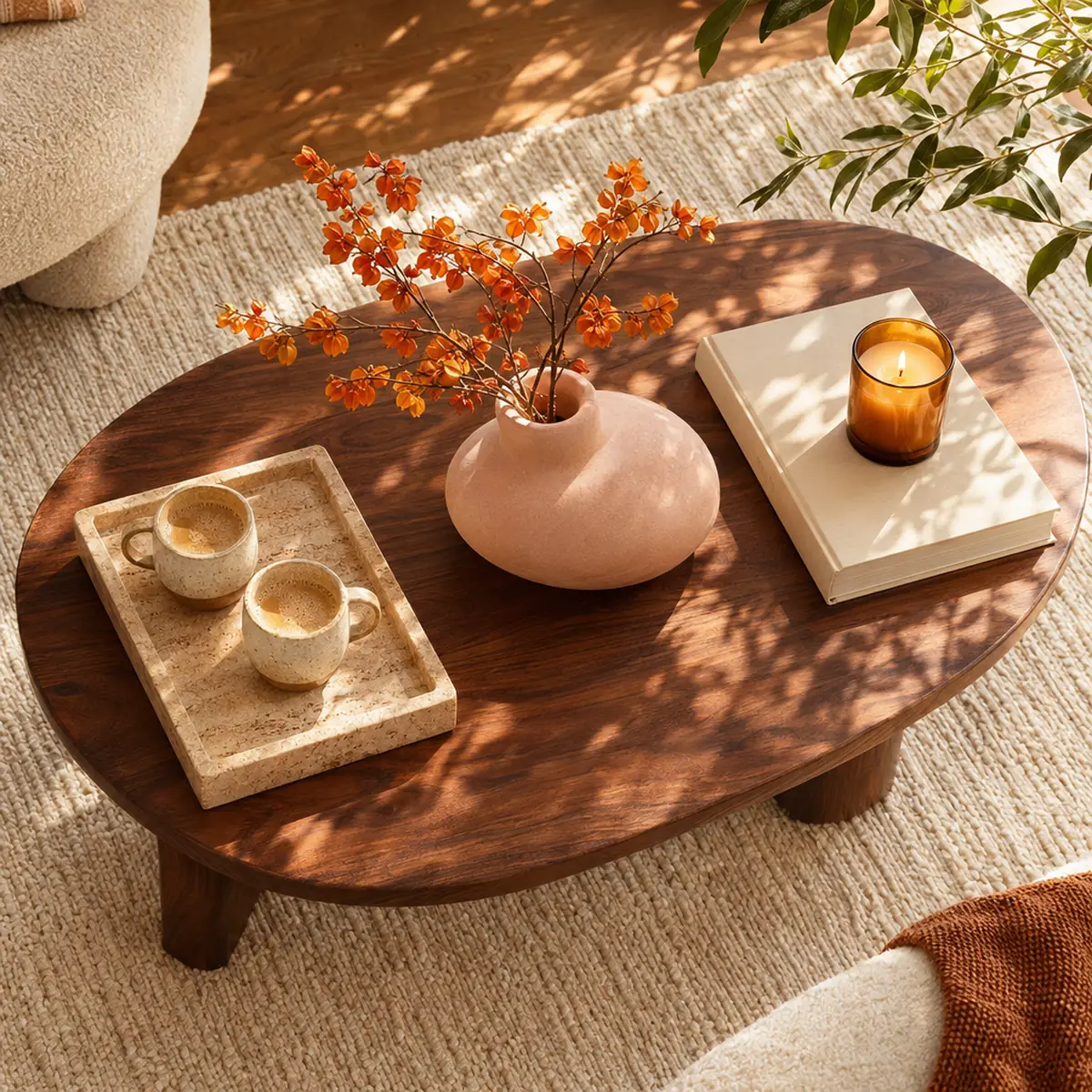
Choose one main decorative moment: artwork above a low dresser, a textured throw across the bed, or a small arrangement on the bedside cabinet. Keep the sleep zone clear of fragile objects that an arm could knock over. The principles in styling a coffee table translate well here: reserve useful surface area before adding display pieces.
A rug is optional, not a small-bedroom requirement. If you use one, check that it does not bunch under a door or slide on the floor. A bedside runner can provide a soft landing without filling the whole room, provided its edges stay flat. Avoid buying a tiny rug simply to tick a decorating box if it makes the walking route less comfortable.
How do you fix a room that still feels crowded?
Take a photograph from the doorway and identify the biggest interruption. It may be a tangle of charging cables, several unrelated storage baskets, or curtains hiding half the window. Change that one thing before purchasing more furniture. Removing a redundant chair can do more for the room than adding a supposedly space-saving accessory.
Run a one-week trial with the new layout. Notice where clothes land, whether you can open the closet fully, and which items you keep moving to use the nightstand. Those recurring annoyances are useful design information. Add a hook, relocate a hamper, or remove an ornamental stack only after you know what the room needs.
Your questions, answered
Can a small bedroom have dark walls?
Yes. Dark walls can create an enveloping mood. Judge a sample in your actual daylight and evening light, and coordinate bedding and lighting rather than expecting paint to create physical space.
Do nightstands need to match?
No. Aim for convenient reach from the mattress and enough space for each sleeper's essentials. Two different narrow pieces can work better than a matched pair that blocks access.
What should I buy first?
Measure and rearrange first. Buy only for a specific unresolved problem, such as a bedside light you can reach or a container that fits the space beneath your bed.
Sources & further reading
Sources support the factual guidance they address; aesthetic suggestions are editorial judgment, not claims of product testing.