When deciding what to wear to a concert, start with the venue, weather, and whether you will stand or sit. Choose familiar shoes, clothing you can move in, and a manageable layer; then add one detail that suits the music or your personal style. Check the venue's bag and entry rules before choosing accessories.
This guide may contain affiliate links. As an Amazon Associate we earn from qualifying purchases. How our links work.
What should you check before choosing a concert outfit?
Read the event page and the venue's current policies, not just a photo from a previous tour. A seated theater, a standing club, and an outdoor field can require very different choices. Check whether the event is indoors, whether you will queue outside, what bags are allowed, and whether there is a coat check you plan to use.
Look at the forecast for arrival and departure, not only the temperature at the show's start. A warm afternoon can turn into a cold wait for transport. Consider how far you will walk from parking or transit and whether the route involves grass, gravel, or stairs. Those details usually matter more than copying an outfit worn in a staged photograph.
Choose your nonnegotiable practical pieces first: shoes, weather layer, and permitted bag. Then use our fashion styling guides to build the rest around them. This prevents the familiar problem of assembling an outfit you love and discovering that the only bag or shoes that work are unsuitable for the venue.
What works for an indoor standing show?
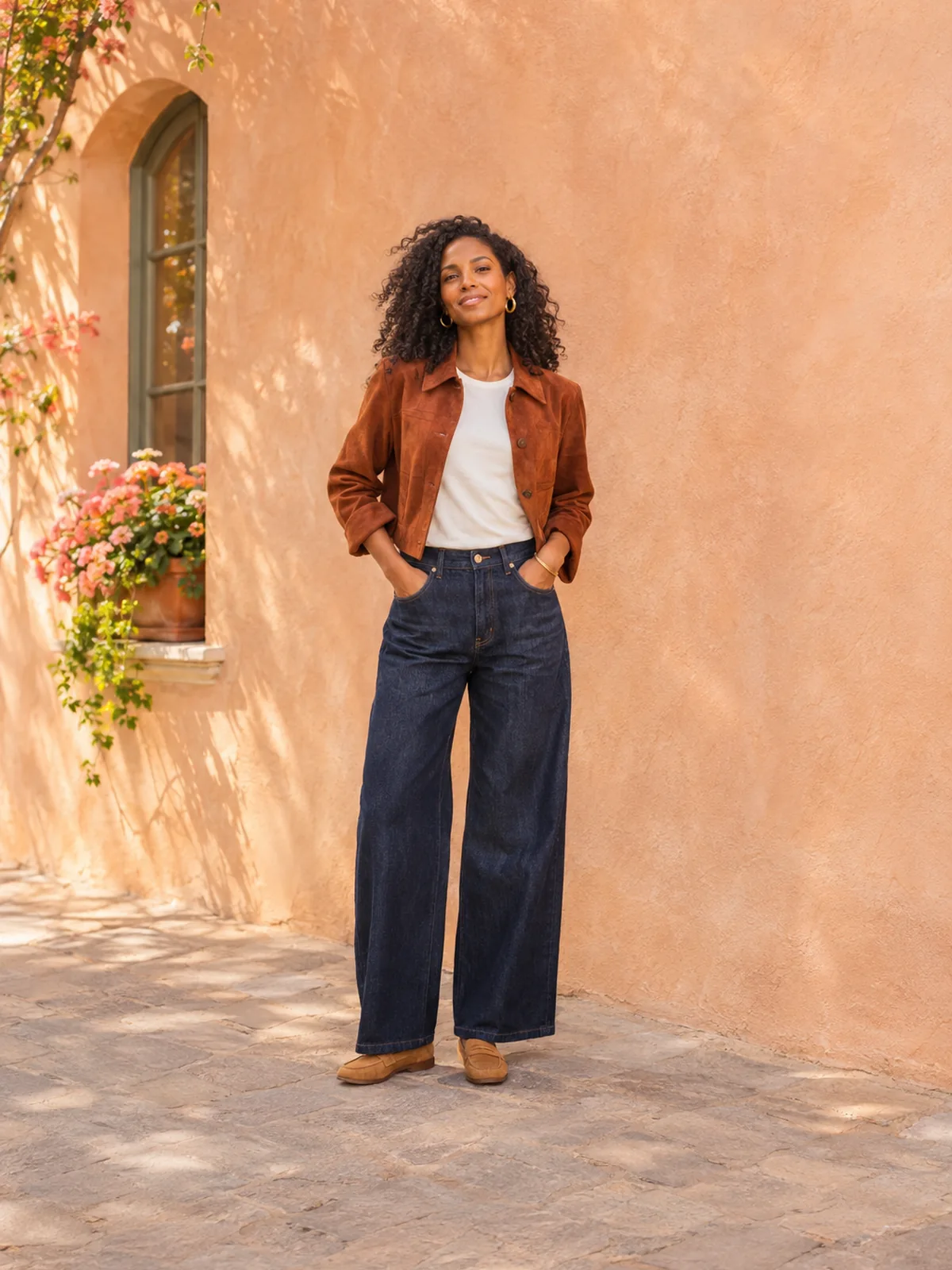
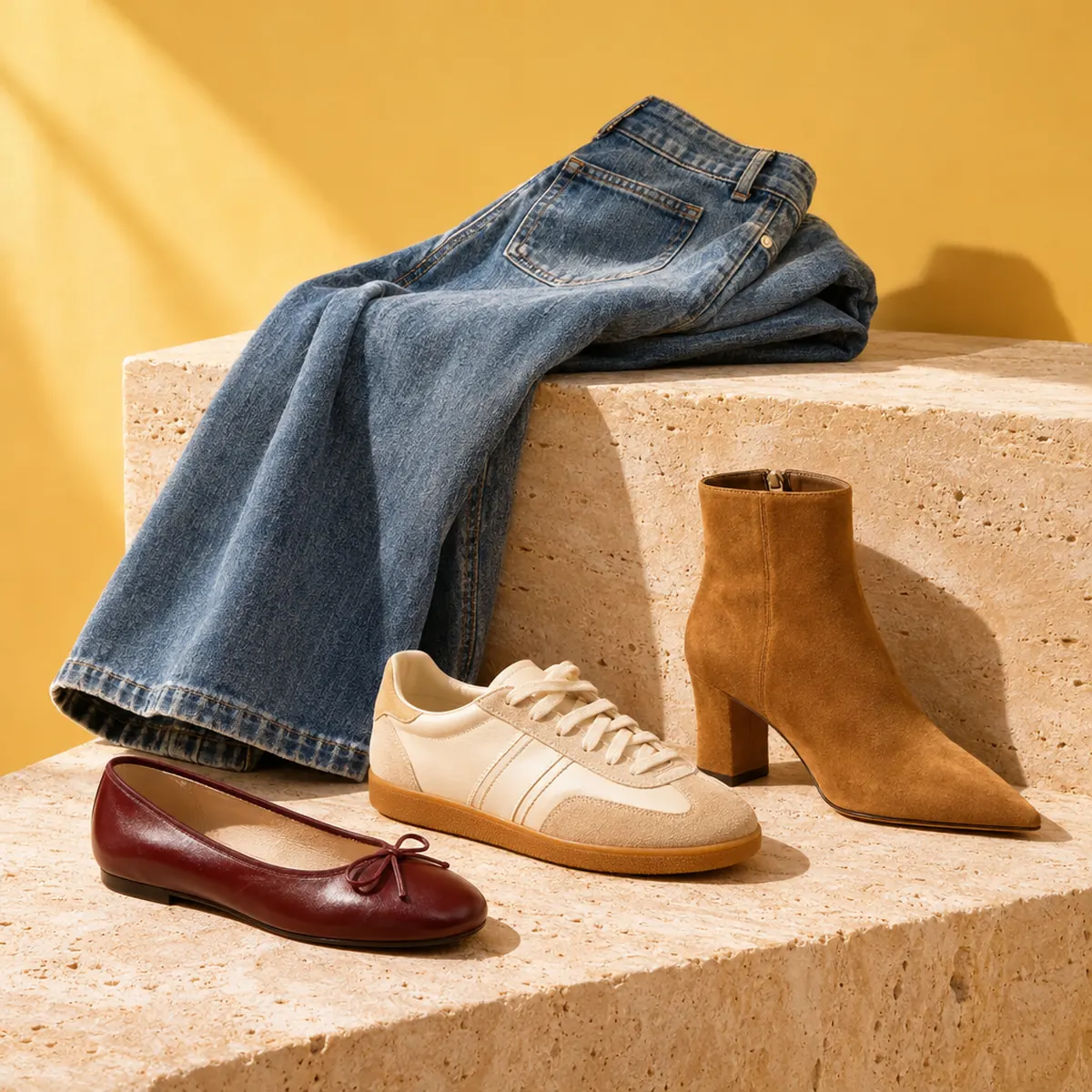
Start with broken-in sneakers or other secure shoes you have already worn for a long stretch. Pair them with straight or wide-leg jeans and a breathable top that allows easy movement. A light overshirt can work as the extra layer if you know where you will put it once the room gets warm.
Keep hems clear of the ground. Very long trousers can drag through spilled drinks or be stepped on in a crowd. If you like a wider silhouette, our guide to styling wide-leg jeans explains how to balance the volume without needing a tiny top or a high heel. Test the hem with the actual shoes before leaving.
Avoid accessories that snag easily, hit other people, or need frequent adjusting. A secure fastening matters more than a dramatic silhouette in a packed space. If you wear a belt, chain, or statement jewelry, check the venue's restrictions and consider whether it will remain comfortable when you are standing shoulder to shoulder.
What should you wear to an outdoor concert?
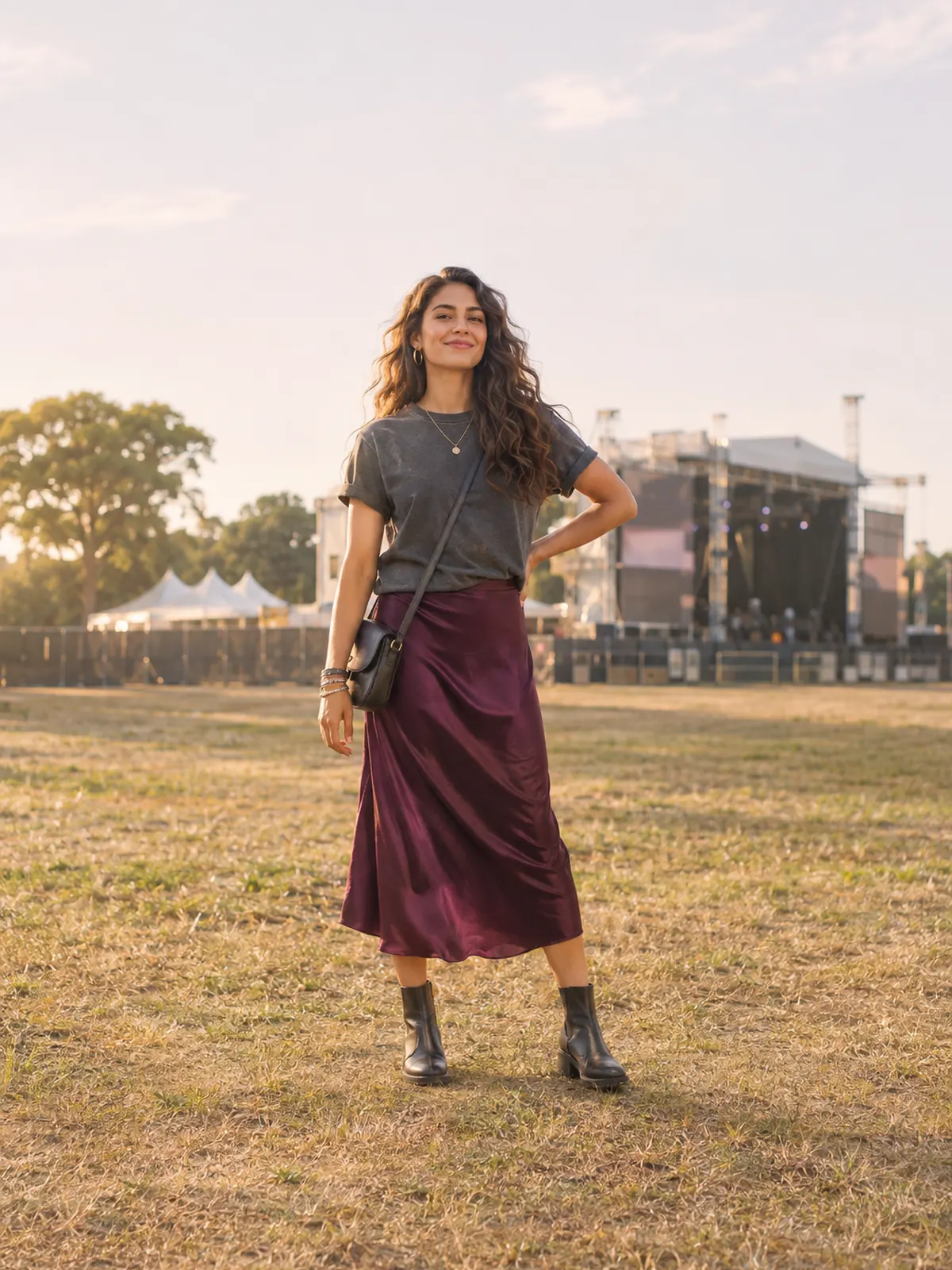
Build around the ground conditions and exposure. On a dry lawn, closed shoes with a stable sole may be more practical than delicate sandals. If rain is possible, choose footwear you can clean and a weather layer that follows the event's rules. Check whether umbrellas are allowed rather than assuming you can bring one.
A simple warm-weather outfit is lightweight trousers or shorts, a comfortable T-shirt or tank, and a packable layer. For cooler conditions, add a sweater or overshirt beneath a suitable outer layer. Avoid packing every contingency into a tiny bag; decide which weather risks are realistic and whether the venue provides shelter.
For daytime exposure, clothing is only part of the plan. The American Academy of Dermatology's sunscreen guidance recommends broad-spectrum, water-resistant sunscreen with SPF 30 or higher, alongside other protective measures. Follow product directions and venue rules about containers. Do not assume a cloudy sky or a short-sleeved outfit removes the need to consider sun protection.
Can you wear a dress, skirt, or heels?
Yes, if the shape and footwear suit your plans. Try a midi dress with secure flats or familiar low boots for a seated show, or a short dress with comfortable sneakers if that feels more like you. Check how the outfit behaves on steps, in a low seat, and when you reach above shoulder height.
For standing tickets, heels require an honest assessment of your feet, balance, and surroundings. A broad heel does not automatically make a shoe comfortable for hours. Shoes that pinch at home are unlikely to become more comfortable after a queue. Consider a reliable flat or low shoe if you are unsure; your outfit can still feel deliberate.
If you choose a skirt, test sitting and walking before leaving. You may prefer shorts underneath for your own comfort, but they are optional rather than a universal rule. Avoid assuming every concert requires a revealing look or a particular body type. The right proportions are the ones you can enjoy the show in.
How do you reflect the music without wearing a costume?
Use one recognizable detail instead of assembling a full genre uniform. For a country show, familiar jeans and boots you already find comfortable can be enough. For a rock show, a graphic tee or a dark overshirt can carry the reference. Pop concerts can be a good setting for color, metallic accents, or playful jewelry if those pieces meet the practical checks.
You do not need to buy merchandise to belong at a show. A plain outfit with a distinctive jacket, scarf, or lip color can feel celebratory. If your everyday style is understated, keep the base simple and make one element more expressive. For more combinations using familiar basics, browse our outfit ideas.
Follow any explicit event dress guidance, particularly for performances in formal settings. A classical concert or an invitation-only performance may have different expectations from a standing arena show. When the guidance is unclear, the venue's own information is a better starting point than broad claims that all concerts have the same dress code.
What belongs in your bag, and what should stay home?
Start with the allowed bag dimensions and prohibited-items list. A hands-free bag can be convenient, but it must still comply with the event's policy. Pack only the essentials you will actually use, such as your phone, ticket access, payment method, identification where required, and any permitted personal necessities. Check the policy for medications and accessibility-related items directly.
Consider hearing protection before you arrive. The National Institute on Deafness and Other Communication Disorders explains that loud noise can damage hearing and recommends protective measures. Properly used earplugs, moving away from loud sound sources, and breaks in quieter areas are sensible planning considerations; an attractive outfit is not worth ignoring your hearing.
Leave fragile valuables and unnecessary bulk at home when possible. A large hat can block another person's view, and a heavy jacket may be annoying to hold all night. If you wear a denim jacket, check that it gives enough warmth for the journey home and that you can manage it comfortably inside.
How do you test an outfit before the show?
Do a short rehearsal at home. Walk, sit, bend, raise your arms, and use the pockets or bag fastening. Make sure your phone is secure and your top stays where you want it. Try the outfit with the underwear and socks you plan to wear; small seams or a slipping strap can become a bigger nuisance over several hours.
Take a short walk in the shoes rather than relying on a mirror check. If the hem drags or the waistband digs in, adjust now. Do not make concert night the first long outing for new footwear. Practical backups, such as a permitted compact rain layer, should solve a known problem rather than turn your bag into a second wardrobe.
Finally, plan the trip home and dress for that part too. A layer that looks ordinary in photos may be the most appreciated piece after the encore. Once the practical choices are settled, you can stop adjusting your clothes and pay attention to the performance.
Your questions, answered
Are jeans acceptable for a concert?
Usually for casual shows, but check the venue and event guidance. Choose jeans that allow sitting and standing comfortably, with hems that do not drag.
Should I wear new shoes to a concert?
Familiar shoes are a safer comfort choice for long periods of walking or standing. Test any unfamiliar pair on a shorter outing before relying on it for a show.
Do I need a clear bag?
Only if the venue or event requires one. Bag policies differ, so check the current rules and permitted dimensions before packing.
Sources & further reading
Sources support the factual guidance they address; aesthetic suggestions are editorial judgment, not claims of product testing.