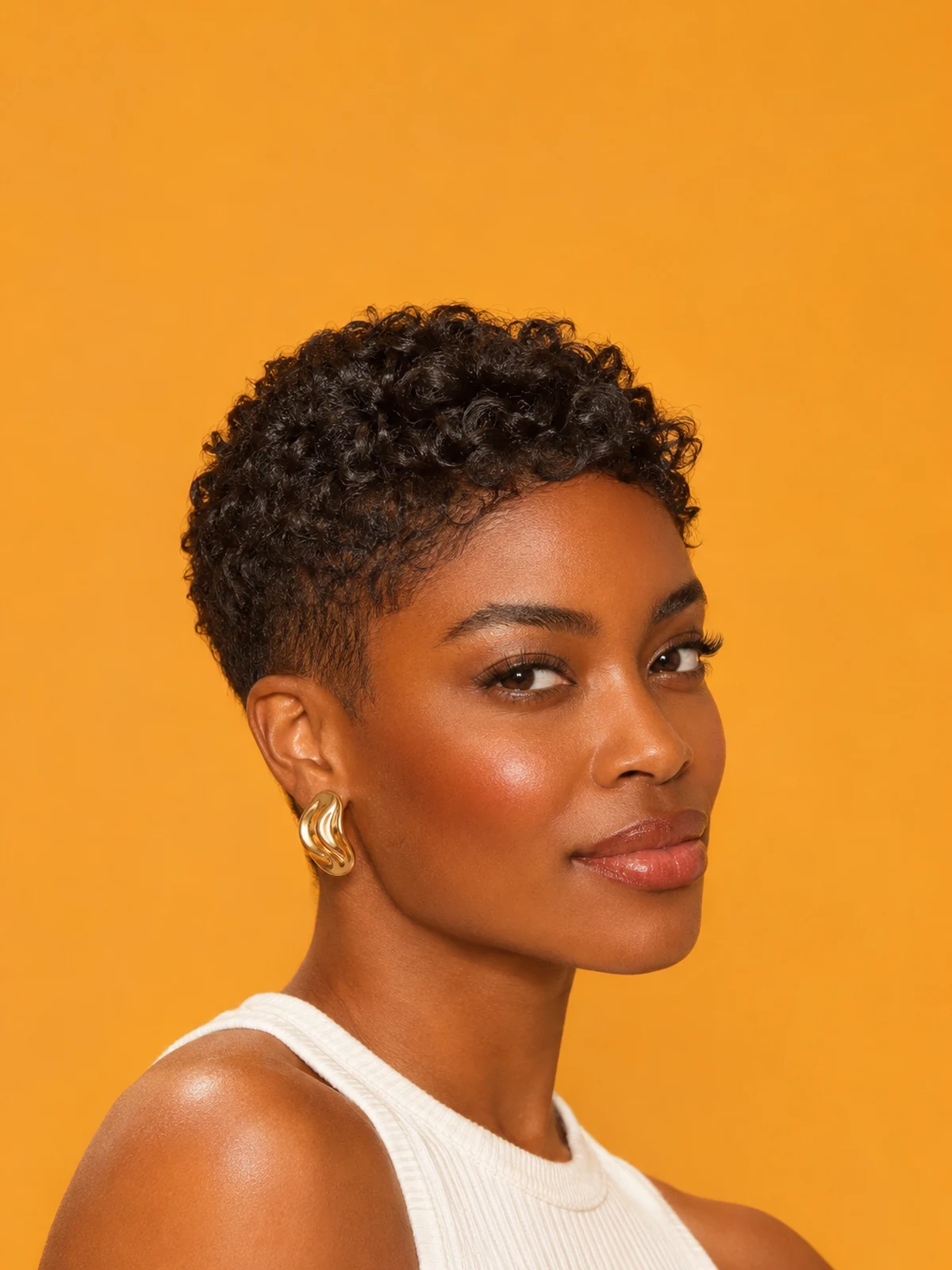
To style curly hair, detangle gently with conditioner, apply a small amount of styler to wet hair, shape the curls and let them dry without constant touching. Once fully dry, soften any stiff product cast with gentle scrunching. Adjust water, hold and section size before buying more products: a routine that preserves your own curl pattern is more useful than chasing somebody else's.
This guide may contain affiliate links. As an Amazon Associate we earn from qualifying purchases. How our links work.
Start with the result you actually want
Decide whether today calls for defined curl clumps, bigger volume or a fast wash-and-go. Those goals involve different compromises. Separating every curl may add fullness but also reduce the smooth, grouped appearance of a defined set. A neat crown and a larger silhouette can both be successful outcomes; neither proves that your hair is healthier.
Notice your hair's behavior rather than relying only on a curl-type chart. Fine strands may feel coated by a rich cream even when tightly curled, while thicker strands may need more conditioning. If the overall length is difficult to manage, compare shaping ideas in our short-hair styling guide. For other everyday routines, explore the beauty hub.
Cleanse the scalp and detangle in sections
Wet your hair thoroughly, massage shampoo onto the scalp with your fingertips and let the rinse carry it through the lengths. Choose your wash schedule around scalp oil, sweat, product buildup and comfort, rather than a universal weekly rule. A scalp that feels persistently itchy or irritated needs attention, not simply another layer of oil.
Apply conditioner to the lengths, then divide thick hair into manageable sections. Ease tangles apart from the ends upward using fingers or a wide-tooth comb; do not yank through a knot from the roots. The American Academy of Dermatology's healthy-hair guidance specifically notes that thick, curly hair can be combed in the shower before rinsing out conditioner. Support each section with your other hand to limit pulling.
Choose a small, readable product routine
A leave-in conditioner and a hold product can be a useful starting pair, but you may not need both. Conditioner addresses manageability; gel or mousse helps preserve the shape you arrange. A curl cream can provide softness and some styling support, although its hold depends on the formula. Product labels are more informative than assuming every cream or foam behaves alike.
Begin with a small amount distributed across your palms and add only where needed. On short or fine hair, try one light styler first. On dense hair, apply across several sections instead of concentrating everything on the outside. Follow the package directions, including whether a conditioner is meant to be rinsed out; ordinary rinse-out conditioner is not automatically a leave-in.
Use water to help curls group together
Apply styler while the hair is still wet enough that strands naturally form little ribbons. Smooth your palms lightly over a section, then cup the ends and scrunch upward. If a section separates into fuzzy strands before it has even begun drying, re-wet that section with your hands and redistribute the existing product before adding another dose.
There is no need to soak the bathroom floor. Wet and evenly slippery is a workable starting point; dripping saturation is not mandatory. If the result dries stringy and takes ages, experiment with gently removing some water before styling next time. Keep the rest of the routine unchanged so you can tell whether that one adjustment helped.
Shape only the sections that need help
For an easy set, work around your head in broad sections and scrunch each one. If the hair around your face needs direction, wrap a small damp section loosely around a finger following its natural bend, then release it. Avoid winding so tightly that you pull at the scalp. Finger shaping is optional, not a requirement for every curl.
Set your part before the roots dry. A loosely placed root clip may support a flat area while it dries, provided it does not tug or leave a mark you dislike. If you also have a fringe, style that area separately rather than dragging it through the rest of the routine; our bangs styling guide explains directional drying.
Dry without repeatedly disturbing the surface
Air-drying works if it fits your schedule. To remove excess moisture first, gently press with a soft towel or cotton T-shirt instead of rubbing. Once the shape is arranged, leave it alone as much as possible. Moving damp curls repeatedly can break up the groups you just formed and create a less defined finish.
If you diffuse, start with low airflow and a low or medium heat setting. Keep the appliance moving rather than parking hot air against your scalp. Use a heat-protection product according to its directions; protection does not make unlimited heat harmless. A diffuser spreads airflow but does not eliminate heat exposure. Stop if the temperature feels uncomfortable, and follow the dryer's instructions about attachments and clearance.
Soften a cast only after hair is fully dry
Some gels dry into a firm shell often called a cast. That can feel odd but does not necessarily mean you used the wrong product. Wait until the roots and inner layers are dry, then gently cup and squeeze the curls with clean, dry hands. The goal is to soften the finish without pulling the shape apart.
If hair stays sticky, feels coated or flakes when you scrunch, reconsider the amount and combination of products. Use less next wash, or test the hold product without the cream underneath. Flaking may reflect residue or an incompatible pairing, but persistent scalp flakes can have other causes. Seek medical advice for ongoing redness, discomfort or unexplained scaling rather than treating everything as a styling issue.
Refresh yesterday's curls selectively
In the morning, assess the front, crown and flattened side before wetting your whole head. Mist or dampen your hands, smooth a small amount of water over an unruly section, then scrunch or reshape it. If the existing product reactivates enough to hold the curl, skip another layer. Let the refreshed section dry before fluffing.
For sleep, gather longer hair loosely if that is comfortable, or use a smooth pillowcase or an untight bonnet. These are friction-management options, not guarantees against breakage. Avoid a tight topknot that pulls along the hairline. On nights when your scalp needs a break, simply leave the hair loose and plan a small refresh.
Troubleshoot the pattern, not every individual strand
Flat roots with defined ends can come from product concentrated near the scalp, a heavy formula or drying in one fixed position. Apply less conditioner near the roots and try arranging the crown differently while drying. Frizzy ends with a smooth crown may need gentler detangling or a trim if they are split; adding gel cannot permanently repair a split strand.
If the whole style collapses quickly, first make sure the hair dried completely. Next time, test slightly more hold instead of more conditioning cream. If your curls feel rigid even after gentle scrunching, reduce the styler. A little surface frizz is normal and does not invalidate the routine. Judge success by comfort, manageability and a result you enjoy wearing.
Your questions, answered
Should I brush curly hair after it dries?
For a defined curl set, dry brushing usually separates the clumps you worked to preserve. Detangle gently while conditioning instead. If a brushed-out, fuller shape is your goal, that is a styling choice; work slowly and stop if the brush catches or pulls.
Do I need gel and mousse together?
No. Begin with one hold product so you can judge its effect. If mousse provides the softness and hold you want, adding gel may be unnecessary. Try a second product only to solve a specific problem, such as a crown that loses definition.
Can I style curls without heat?
Yes. Apply your chosen styler, shape wet sections and air-dry with minimal touching. Allow enough time for the roots to dry before sleeping or gathering the hair. A no-heat routine can still involve tension damage if you use tight bands or pull hard while detangling.
Sources & further reading
- American Academy of Dermatology: Tips for healthy hair
- American Academy of Dermatology: 10 hair-care habits that can damage your hair
- American Academy of Dermatology: Hairstyles that pull can lead to hair loss
Sources support the factual guidance they address; aesthetic suggestions are editorial judgment, not claims of product testing.