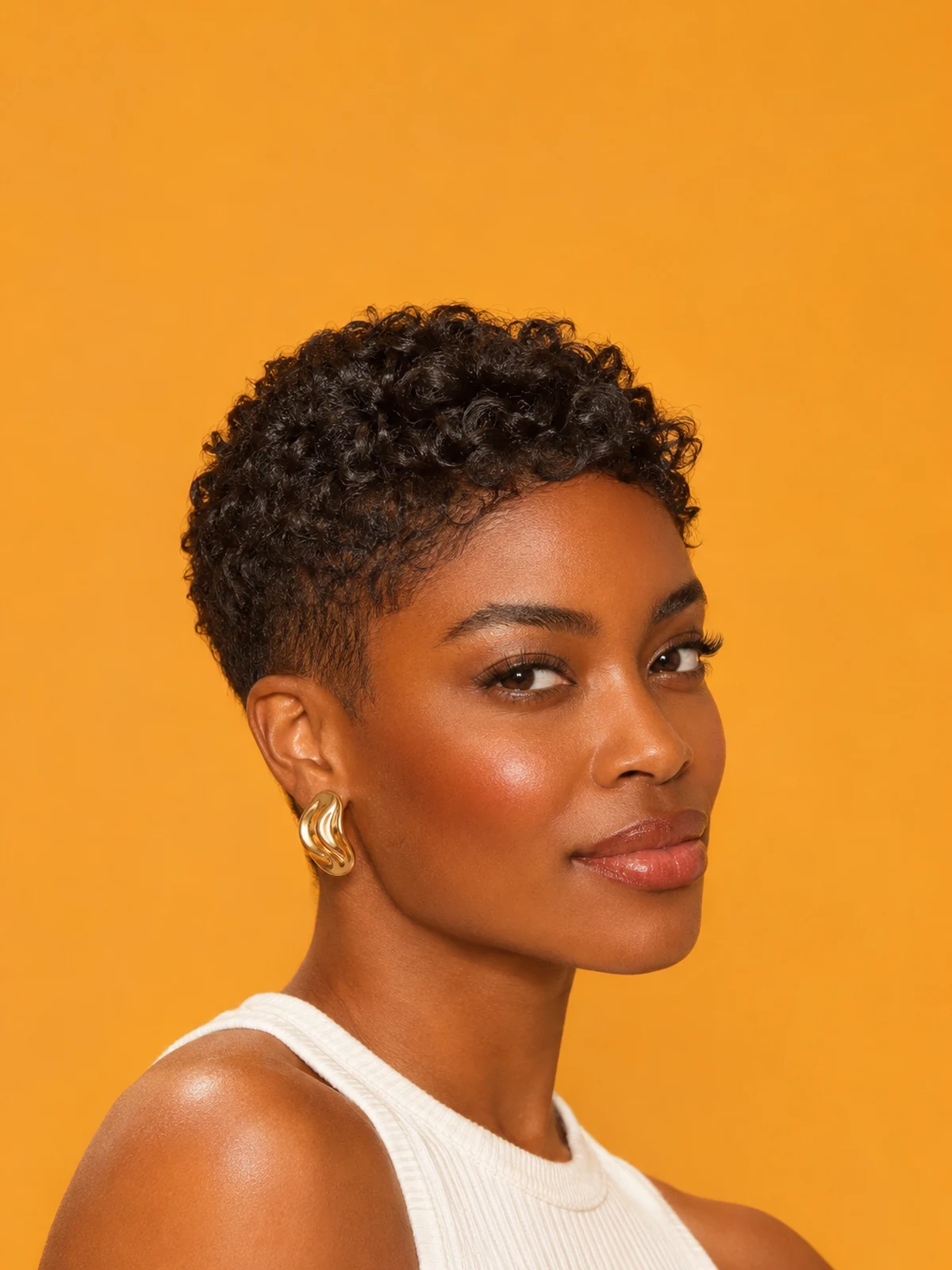
To style a bob, decide where you want volume, set your part while the hair is damp and dry the roots before refining the ends. Use a brush for a smooth curve, a loose twist for soft movement or your natural curl pattern for texture. You do not need to straighten every section: concentrating on the visible top layer and face-framing pieces can be enough.
This guide may contain affiliate links. As an Amazon Associate we earn from qualifying purchases. How our links work.
Read the cut before choosing a technique
A blunt bob, a layered bob and a longer bob do not fall the same way. A heavy perimeter emphasizes a graphic line; shorter internal layers can encourage movement. Before reaching for a tool, let freshly washed hair settle and notice where it naturally bends. Trying to force every section in the opposite direction can turn a simple style into a daily project.
Length also matters. Hair that meets a collar or shoulder may turn outward because it rests against fabric or your body. That is not automatically a bad haircut. Decide whether to encourage the flip, tuck one side back or change the finish. Our beauty hub has more styling starting points if you are still figuring out what suits your routine.
Prepare the roots without weighing down the ends
After washing, condition according to your hair's needs and remove excess water by gently pressing rather than rubbing. Detangle carefully. The American Academy of Dermatology advises letting straight hair dry a little before combing, while thick curly hair can be combed with conditioner in the shower. Use that distinction instead of treating every bob as naturally straight.
Set your part and smooth the crown with your hands. If your ends are fine, avoid loading them with several rich products before you know what they need. A lightweight hold product may be useful for lift; a small amount of smoothing product may suit puffier lengths. You can add a little later, but excess is harder to remove without washing.
Create a smooth bob with a soft bend
For a smooth finish, loosely dry the roots first with airflow directed along the hair rather than whipping upward through it. Divide the hair into a bottom layer and an upper layer so you can reach the nape. Work in sections small enough that the brush can control them without pulling. Keep the nozzle away from direct contact with hair and skin.
As a section approaches dry, guide the ends over a brush in a gentle curve. A modest bend usually looks more relaxed than rolling the whole length under repeatedly. Use low or medium heat and a heat-protection product according to its instructions. If the back is hard to reach, prioritize a comfortable angle rather than twisting your wrist around a hot tool.
Add soft bends without making a ringlet helmet
If you use a curling tool, begin only when the hair is fully dry. Follow the tool's instructions and choose the lowest effective heat rather than assuming a bob needs a high setting. Work on a few middle-length sections, making a loose bend and leaving the ends less curled. Keep the tool away from ears and the back of your neck.
Let each bend cool before separating it with your fingers. A whole head of identical tight curls can create more volume than you intended on a short perimeter. You can instead shape just the face-framing pieces and the visible top layer, then assess the silhouette. If the result is too rounded, gently loosen the cooled bends rather than immediately reheating them.
Try an air-dried bob with deliberate direction
For a straighter bob, set your part while damp, tuck one side loosely behind an ear and leave the other side to dry without constant handling. This may create an easy asymmetrical shape, although it will not turn every hair texture into a sleek blowout. Remove the tuck if it is leaving a stronger bend than you want.
For wavy hair, scrunch in a light hold product and let the waves form instead of brushing them out halfway through drying. For curls, style in wet sections and let the perimeter shrink naturally; the curly-hair routine explains product distribution and gentle drying. A textured bob can have a rounded silhouette without every curl sitting at exactly the same height.
Make a tucked bob feel intentional
A one-sided ear tuck is useful when the front keeps falling into your face. Arrange your part, smooth the tucked side gently and leave some movement on the opposite side. If you want more security, place a small pin where it will not poke your scalp. Choose a smooth-edged accessory that releases without snagging.
A headband can move both sides back, but it should not create pressure behind your ears. For a half-up shape, gather only the top section and keep the tie loose. Shorter pieces at the nape can stay out. You do not need a severe, fully slicked finish to make an everyday bob look deliberate.
Solve the bulky-back, flat-crown combination
When the nape sticks out but the crown lies flat, adding more product everywhere can make both problems worse. Check that the underside is not still damp. Try drying the nape downward while lifting the crown gently with your fingers or a brush. Remove sectioning clips as you go so you do not leave strong dents in the visible layer.
If the shape repeatedly feels triangular despite different styling attempts, discuss the distribution of weight at your next haircut. Bring a photo of your hair on an ordinary day, not just an inspiration image. Ask what can realistically change with cutting versus styling. A hot tool can rearrange a section temporarily, but it cannot remove excess bulk built into a cut.
Work with flips at the jaw, neck or shoulder
First identify what is pushing the hair outward. A coat collar, a scarf, sleeping on one side or damp hair tucked behind an ear can all change the outline. Remove the obstruction, lightly dampen only the affected section and reset its direction. There is no need to rewash the entire bob because one corner flicks out.
If your length naturally flips at the shoulders, consider matching the other side for a deliberate kick. Alternatively, smooth the front and let the back keep a little movement. Shorter face-framing pieces have their own directional challenges; the bangs styling guide covers how to address them before they dry into place.
Keep the next-day reset small
Start with a mirror check from the side and back, not only straight on. Refresh a flattened crown with a little water at the roots, then direct it into place. If you use a dryer, keep heat moderate and limit it to the area you dampened. Do not use a flat iron on a still-wet patch.
Dry shampoo may help absorb oil if you follow its label, but it does not replace washing your scalp. Use it sparingly and keep spray away from eyes and inhalation. If you are repeatedly layering powders to prop up limp hair, simplify the wash-day products first. The easiest bob routine is often one that needs fewer corrections the following morning.
Your questions, answered
Can I style a bob without a round brush?
Yes. A paddle brush, your fingers or an air-dry routine can all work, depending on your hair and the finish you want. A round brush is useful for a curved end, but it is not essential for a bob that looks considered.
Why does one side of my bob flip more?
Your growth direction, part, sleeping position or an ear tuck may differ from side to side. Reset that section while damp and compare. If it always behaves differently, wear the asymmetry deliberately or discuss the cut's shape at your next appointment.
How do I keep a bob from looking too round?
Use less bend at the ends, avoid curling every layer inward and keep some straighter pieces through the perimeter. Check the outline from the side. If the bulk comes from the cut rather than the finish, more heat is unlikely to be a satisfying long-term fix.
Sources & further reading
- American Academy of Dermatology: Tips for healthy hair
- American Academy of Dermatology: 10 hair-care habits that can damage your hair
Sources support the factual guidance they address; aesthetic suggestions are editorial judgment, not claims of product testing.